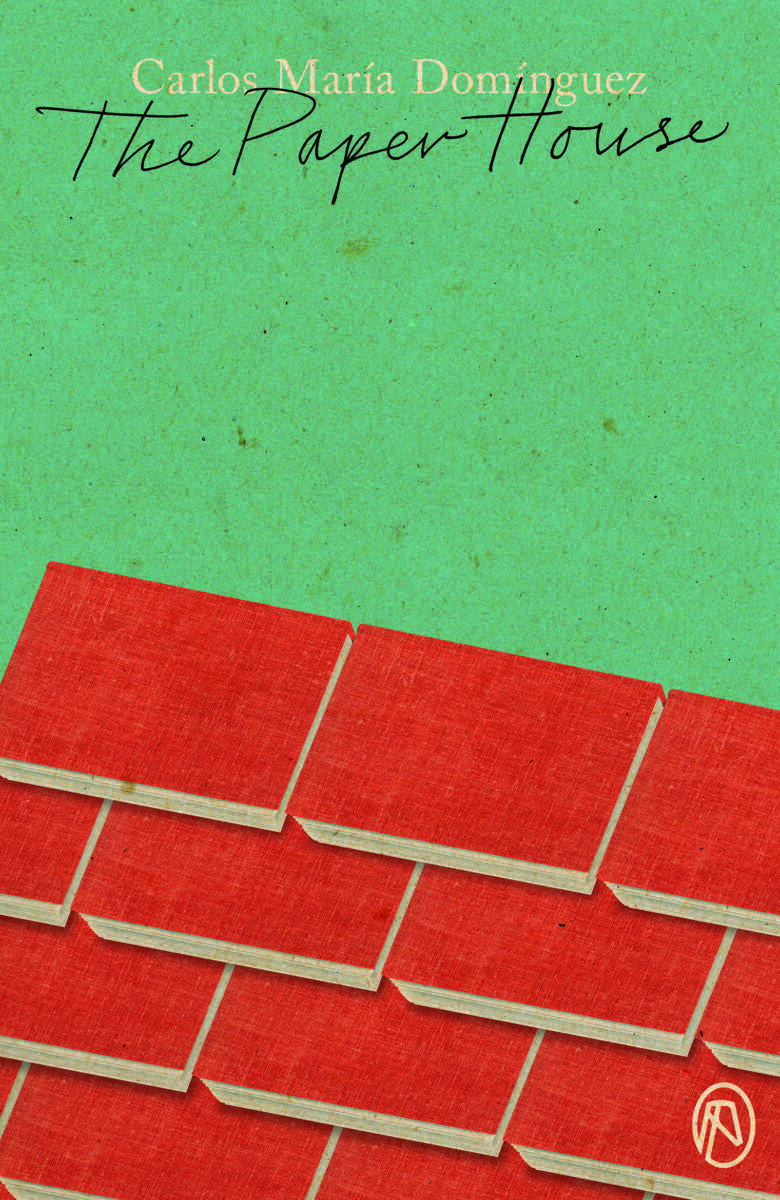
THE PAPER HOUSE
Carlos María Domínguez
On a spring day in 1998, literature professor Bluma Lennon buys a used copy of Emily Dickinson’s poems from a Soho bookshop. Moments after she starts reading it, she’s struck by a car on a street corner and killed. After her funeral, one of her colleagues—the book’s narrator—receives a package addressed to Bluma: a broken-spined old copy of Conrad’s The Shadow-Line, inscribed with her own dedication. Intrigued, he sets off on a quest that leads him to Buenos Aires, searching for clues about Carlos Brauer, a devoted book collector, and his mysterious connection to Bluma.
Already a worldwide classic in its genre, The Paper House is a venture beyond our shadow lines, and what we fear to leave behind to cross them.
Excerpt:
It is often much harder to get rid of books than it is to acquire them. They stick to us in that pact of need and oblivion we make with them, witnesses to a moment in our lives we will never see again. While they are still there, it is part of us. […] Nobody wants to mislay a book. We prefer to lose a ring, a watch, our umbrella, rather than a book whose pages we will never read again, but which retains, just in the sound of its title, a remote and perhaps long-lost emotion.
“For those who enjoy the magic of literature.”
–Ayfer Tunç, the author of The History of a Madhouse“The Paper House is one of those little books that can haunt a reader long after it is finished – or used as a brick to make a house. It comes from a territory of the imagination that is distant and dreamlike.”
–Alexander McCall Smith, The New York Times Book Review
- Translated into over 20 languages, sold 250,000 copies worldwide
- Domínguez is honoured by many awards including the Bartolomé Hidalgo Prize, the most important literary award in Uruguay.
- Praised by renowned authors, such as Alexander McCall Smith, Ayfer Tunç, and Miranda France